

English and Dutch colonists carried the practice of tea drinking to North America during the seventeenth century. By the mid-1600s, household inventories were already recording the wares used to prepare and serve it. American silversmiths began making teapots by the start of the eighteenth century.
Personal accounts offer a closer look at those early tea drinkers. In December 1757, George Washington ordered six pounds of Hyson tea from England, along with six pounds of another green tea. Twenty years later, Thomas Jefferson recorded purchases of Bohea and Congou within the same month. These households bought named varieties, choosing among teas that differed in processing, grade, and price.
The Overseas Tea Trade
The black and green teas imported into colonial America came from China. In the British trade, shipments generally traveled through England before crossing the Atlantic. Colonists also bought tea supplied through Dutch trading networks, much of it smuggled to avoid British duties.
The voyage from Canton, now Guangzhou, to England could take nearly a year. Ships crossed the Indian Ocean and rounded Africa’s Cape of Good Hope, exposing their cargo to months of damp conditions. On arrival in London, tea was unpacked, inspected, and repacked; some shipments had suffered water damage or mold along the way.
Time in storage could extend the journey considerably. The Boston Tea Party Ships & Museum dates the tea destroyed in December 1773 to the harvests of 1770 and 1771. Those leaves were already two or three years old when they reached Boston, after transport from China and storage in London warehouses.
Wooden shipping chests were lined with metal to help protect the leaves from moisture and outside odors. The surviving invoice for the Beaver, one of the Boston tea ships, records the cargo by variety, chest count, weight, and price.
What Tea Did American Colonists Drink?
The Boston Tea Party cargo included three black teas, Bohea, Congou, and Souchong, and two green teas, Hyson and Singlo.
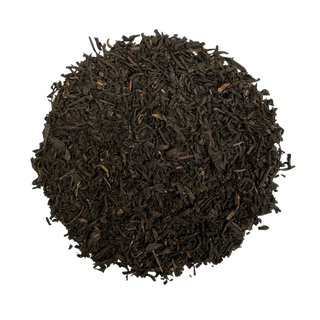
Black Tea
Bohea
Pronounced “boo-hee,” Bohea takes its name from China’s Wuyi region. Its name became a common shorthand for tea. Of the 340 chests destroyed in Boston Harbor, 240 contained Bohea, far exceeding the number of chests of any other variety.
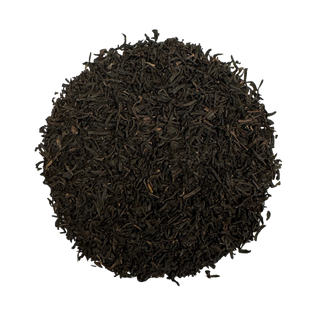
Black Tea
Congou
Congou’s name refers to the skilled work involved in preparing the leaves. Careful processing produced thin strips without breaking them. Thomas Jefferson’s accounts record a purchase of two pounds of “Congo” on December 25, 1777, twelve days after he had bought the same quantity of Bohea.
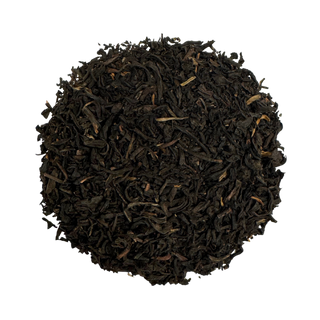
Black Tea
Souchong
Souchong came from the Wuyi Mountains of Fujian. Its smoky aroma developed as the leaves absorbed smoke during drying. In modern smoked Lapsang Souchong, smoldering pinewood produces the pronounced aroma many drinkers recognize. Souchong appears among the black teas listed in the Boston Tea Party cargo.

Green Tea
Hyson
Hyson was a spring-picked green tea with well-documented admirers. In 1757, George Washington requested “6 lb. best Hyson Tea” from his English supplier. Thomas Jefferson also purchased Hyson, and Monticello identifies Young Hyson among his preferred teas.
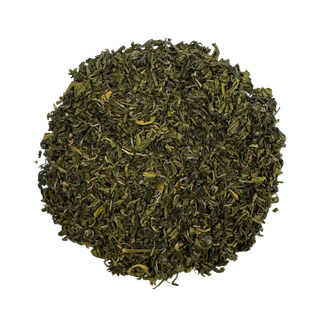
Green Tea
Singlo
Singlo takes its name from the Sunglo Mountains in what is now Anhui Province. Its slightly curled leaves required different packing from tightly compressed black tea. Better grades traveled in smaller half-chests, helping merchants keep the price of a chest manageable even when the tea itself cost more per pound.
Silver, Porcelain, and the Tea Service
Tea drinking created a demand for objects devoted to its preparation and service. Teapots, tea caddies, sugar bowls, and other vessels became part of the household, ranging from practical wares to expensive displays of taste.
American silversmiths followed changing fashions in these objects. Rounded and pear-shaped teapots gave way to apple-shaped forms by the mid-eighteenth century. Matching tea services did not appear until the 1790s; an earlier tea table might hold pieces acquired separately over many years. Paul Revere’s surviving work includes teapots, sugar bowls, and a tea urn.
Tea was also served with breakfast. Visitors to Mount Vernon described tea and coffee accompanying cold and broiled meats. Martha Washington’s granddaughter recalled George Washington taking three cups of tea without cream with his customary meal of cornmeal cakes, butter, and honey.

When Tea Became Political
Parliament’s Townshend duties placed a tax on tea in 1767. When most of those duties were repealed in 1770, the tea duty remained. Colonial buyers continued purchasing smuggled Dutch tea, while opponents of British taxation urged households to boycott taxed imports. The Tea Act of 1773 supported the financially troubled East India Company by changing how it could sell tea to the American colonies. It did not introduce a new tea tax. The existing duty remained, and opponents challenged both Parliament’s authority to tax the colonies and the commercial advantages granted to the company.
On December 16, 1773, protesters in Boston destroyed 340 chests of East India Company tea.
Boycotts changed what some Americans put in their cups. Raspberry leaves and other locally available plants supplied substitutes known as “liberty teas,” allowing households to serve tea without purchasing British imports.
Tea Held at Charleston’s Exchange
Charleston’s response took a different form. In 1773, tea arriving in the port was seized and stored in the Exchange and Customs House.
The following year, representatives from across South Carolina met at the Exchange to elect delegates to the Continental Congress. The building served both the commercial business of a busy port and the political business of a colony moving toward independence.
Oliver Pluff & Co. prepares its teas in Charleston, where the surviving Exchange building remains a local landmark of the tea crisis.
Tea After Independence
In 1784, the Empress of China opened direct trade between the newly independent United States and China. American merchants sought tea, porcelain, and textiles, establishing their own trading connections after independence.
Tea continued to appear in household accounts. In March 1791, Thomas Jefferson calculated that a pound of Imperial tea had lasted him exactly seven weeks, used six times a week. His reckoning came to 126 cups for two dollars.

Sip a Cup of History
Our Teas of the Boston Tea Party collection offers five teas representing the varieties recorded aboard the ships in Boston Harbor in 1773.